Author: Ti

  • United Kingdom Citizenship by Investment: Business Residency Pathway and Naturalization

    The United Kingdom does not offer a direct citizenship-by-investment program that allows foreign nationals to obtain a British passport simply by making a financial investment. Instead, entrepreneurs and investors can establish a pathway to citizenship through business-based immigration routes, particularly the Innovator Founder visa.

    This route is designed for entrepreneurs who create and develop innovative businesses in the UK. Successful applicants may eventually qualify for Indefinite Leave to Remain (ILR) and, after meeting additional requirements, apply for British citizenship through naturalization.

    1. Innovator Founder Visa: The Main Business Route

    The Innovator Founder visa is aimed at entrepreneurs who want to establish and grow an innovative business in the United Kingdom.

    Applicants must demonstrate that their business idea is:

    • Innovative: The business must offer a new product, service, or approach that is not simply a copy of existing businesses.
    • Viable: The applicant must show that the business model is realistic and has the potential for success.
    • Scalable: The company should demonstrate potential for growth, expansion, and contribution to the UK economy.

    Business Approval Requirement

    Before applying, entrepreneurs must receive an endorsement from an approved UK Endorsing Body.

    The endorsing organization evaluates factors such as:

    • The uniqueness of the business concept
    • The entrepreneur’s skills and experience
    • Market potential
    • Growth strategy
    • Economic contribution

    2. Investment Requirements

    Unlike the previous investor visa system, the Innovator Founder route does not require a fixed minimum investment amount.

    The previous Tier 1 (Investor) Visa, which required a £2 million investment in qualifying UK assets, was closed to new applicants.

    Although there is no mandatory investment threshold under the Innovator Founder route, entrepreneurs often need sufficient funding to successfully launch and operate their business. The amount required depends on the nature, sector, and scale of the proposed venture.

    3. Pathway to British Citizenship

    The Innovator Founder visa can provide a route from business residency to permanent settlement and citizenship.

    Temporary Residence

    The visa is generally granted for up to three years and allows entrepreneurs to:

    • Operate their UK business
    • Develop their company
    • Expand commercial activities
    • Bring eligible family members, subject to requirements

    Indefinite Leave to Remain (ILR)

    After three years of qualifying residence, applicants may become eligible to apply for Indefinite Leave to Remain, provided they meet settlement requirements.

    Requirements may include:

    • Meeting business performance criteria
    • Continued endorsement of the business
    • Passing the English language requirement
    • Passing the Life in the UK Test
    • Meeting residence and absence limits

    British Citizenship

    After obtaining ILR, applicants can usually apply for British citizenship after holding settled status for 12 months (unless they are married to or in a civil partnership with a British citizen).

    The overall pathway may therefore take approximately four years or more, depending on personal circumstances and application timing.

    4. Benefits of British Citizenship

    Becoming a British citizen provides significant advantages, including:

    • A UK passport
    • The right to live and work permanently in the United Kingdom
    • Access to British education and employment opportunities
    • Visa-free or simplified travel to many countries
    • The ability to pass citizenship to eligible children

    5. The Former Tier 1 Investor Visa

    The previous Tier 1 (Investor) Visa provided residency for individuals who invested at least £2 million in qualifying UK investments.

    However, this route was closed to new applicants due to concerns regarding financial transparency and national security.

    Important Considerations

    The UK’s current approach focuses on attracting entrepreneurs and business creators rather than passive investors. Applicants must demonstrate genuine business activity and contribute to the UK economy rather than simply transferring capital.

    Immigration rules, settlement requirements, and citizenship regulations can change over time. Prospective applicants should seek advice from qualified UK immigration professionals before starting the application process.
  • The Most Visited Cities and Tourist Destinations in England

    England’s most visited cities offer an impressive blend of world-famous landmarks, historic architecture, vibrant cultural scenes, and beautiful coastal escapes. From the global appeal of London to the medieval streets of York and the lively waterfronts of Liverpool and Bristol, these destinations attract millions of domestic and international visitors every year. Whether you’re interested in history, shopping, museums, sporting events, or seaside holidays, England’s cities provide unforgettable experiences for every type of traveler.

    1. London

    England’s capital is one of the world’s leading tourist destinations, welcoming more than 20 million visitors annually. Home to iconic attractions such as the British Museum, the Tower of London, Buckingham Palace, Big Ben, and the Houses of Parliament, London offers an extraordinary mix of history, culture, entertainment, and world-class shopping. The city’s diverse neighborhoods, renowned theatres in the West End, and extensive public transport system make it an essential stop for visitors to England.

    2. Manchester

    Manchester attracts around 8 million visitors each year and is celebrated for its rich industrial heritage, legendary music scene, and global football reputation. Football fans flock to Old Trafford and the Etihad Stadium, while music lovers explore venues linked to legendary bands such as Oasis and The Smiths. The city also offers excellent museums, modern shopping districts, and a thriving culinary scene.

    3. Birmingham

    As England’s second-largest city, Birmingham welcomes approximately 6 million visitors annually. Known for its extensive network of canals, the city features excellent shopping at Bullring & Grand Central, diverse restaurants, and vibrant cultural attractions. Visitors also enjoy the Birmingham Museum & Art Gallery, the Jewellery Quarter, and numerous theatres and entertainment venues.

    4. Bath

    A UNESCO World Heritage city, Bath attracts around 6 million visitors every year thanks to its remarkably preserved Roman Baths and elegant Georgian architecture. The city’s honey-colored stone buildings, the Royal Crescent, Bath Abbey, and the nearby Thermae Bath Spa create a unique atmosphere that blends ancient history with modern relaxation.

    5. Liverpool

    Liverpool welcomes more than 3 million visitors annually and is internationally famous as the birthplace of The Beatles. Visitors explore The Beatles Story, the historic Royal Albert Dock, and the city’s impressive maritime museums. Liverpool’s UNESCO-listed waterfront heritage, outstanding galleries, and passionate football culture add to its enduring appeal.

    6. Bristol

    Bristol is one of southwest England’s most creative cities, attracting around 2 million visitors each year. The iconic Clifton Suspension Bridge, designed by Isambard Kingdom Brunel, overlooks the scenic Avon Gorge, while the city’s colorful street art, lively harbor, museums, and independent shops create a dynamic destination for culture lovers.

    7. Brighton

    Brighton is England’s most popular seaside city, drawing approximately 2 million tourists annually. The famous Brighton Palace Pier, pebble beach, historic Royal Pavilion, and the charming independent boutiques of The Lanes make it a favorite destination for weekend breaks. Its vibrant nightlife, festivals, and arts scene further enhance its popularity.

    8. York

    York is one of England’s finest historic cities, attracting around 1 million overnight visitors each year, alongside many day-trippers. Encircled by well-preserved medieval walls, the city is home to the magnificent York Minster, the immersive Jorvik Viking Centre, and the picturesque Shambles, one of Europe’s best-preserved medieval shopping streets.

    9. Leeds

    Leeds has become an increasingly popular destination for shopping, culture, and entertainment, welcoming well over 1 million visitors annually. Highlights include the Royal Armouries Museum, historic Victorian arcades, lively markets, art galleries, and an expanding restaurant and nightlife scene that attracts visitors throughout the year.

    10. Newcastle upon Tyne

    Newcastle upon Tyne attracts approximately 1.5 million tourists annually and is famous for its iconic bridges spanning the River Tyne, including the striking Gateshead Millennium Bridge. The city offers excellent museums, impressive Georgian architecture, vibrant nightlife, and easy access to nearby castles and scenic Northumberland.

    11. Nottingham

    Nottingham welcomes around 1.2 million visitors each year and is forever associated with the legendary tale of Robin Hood. Visitors explore Nottingham Castle, the National Justice Museum, historic caves beneath the city, and nearby Sherwood Forest, creating a fascinating blend of folklore and history.

    12. Cambridge

    Cambridge is renowned worldwide for its prestigious university and beautiful academic architecture, attracting approximately 1 million visitors annually. Visitors enjoy punting along the River Cam, touring the historic colleges, admiring King’s College Chapel, and exploring world-class museums and botanical gardens.

    13. Oxford

    Often referred to as the “City of Dreaming Spires,” Oxford attracts over 1 million visitors every year. Its centuries-old university buildings, Bodleian Library, Christ Church College, University of Oxford Botanic Garden, and picturesque streets have inspired countless writers, filmmakers, and scholars from around the world.

    14. Blackpool

    Blackpool remains one of England’s classic seaside resorts, welcoming more than 1 million visitors annually. Famous for the Blackpool Tower, Pleasure Beach amusement park, illuminations, and traditional beachfront entertainment, the town continues to be a favorite family holiday destination.

    15. Southampton

    Southampton attracts approximately 1 million visitors each year and serves as one of England’s busiest cruise ports. Rich in maritime history, the city is home to the SeaCity Museum, medieval walls, Tudor House and Garden, and offers convenient access to the New Forest National Park and the Isle of Wight.

    Discover England’s Diverse Urban Destinations

    From the cosmopolitan energy of London to the historic charm of York, Bath, Oxford, and Cambridge, England’s most visited cities showcase the country’s remarkable diversity. Whether you’re exploring Roman ruins, medieval cathedrals, bustling shopping districts, famous football stadiums, or traditional seaside resorts, each city offers its own distinctive character and unforgettable attractions. Together, these destinations highlight England’s rich heritage, vibrant culture, and enduring appeal as one of Europe’s premier travel destinations.

  • London is the capital and largest city of the United Kingdom

    London is the capital and largest city of the United Kingdom, located in Southeast England on the River Thames. As a region, it is officially known as Greater London, spanning 1,572
    with a population of over 9 million. It is governed by the Greater London Authority and consists of 32 boroughs plus the City of London.

    Key Facts About the London Region:
    Structure: Comprised of 32 boroughs and the historic City of London (the “Square Mile”), which is the financial district.
    Governance: The region is governed by the Greater London Authority (GLA), which includes the Mayor of London and the London Assembly.
    Geography: Located in Southeast England, it is largely urbanized and sits within a Green Belt, defined by the M25 motorway.
    Demographics: A diverse global city with a population of approximately 9.1 million (2024), while the wider metropolitan area has over 15 million people.
    Districts: Divided into Inner London (12 central boroughs) and Outer London (20 surrounding suburban boroughs).
    History: The modern administrative area of Greater London was formed in 1965.

    Key Regional Components:
    City of London: The ancient, central financial district.
    Westminster: The hub of national government and parliament.
    South London: Areas south of the Thames, including boroughs like Croydon and Greenwich.
    East London: Areas including Tower Hamlets and the Docklands.

  • Regions of England

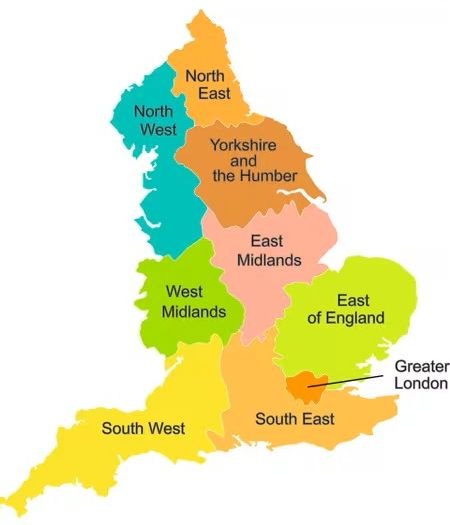
    Regions of England

    England is divided into nine official government regions used for statistical and administrative purposes: London, South East, South West, East of England, West Midlands, East Midlands, Yorkshire and the Humber, North West, and North East.

    These regions often have distinct economic, cultural, and geographical characteristics, ranging from industrial northern areas to agricultural and coastal southern regions.

    The Nine Regions of England
    London: The capital and largest city, serving as the country’s economic and political hub.
    South East: Encircles London, featuring historic towns and high-tech industries.
    South West: Known for its coastline, tourism, and rural landscape.
    East of England: Known for agriculture and high-technology industries.
    West Midlands: A historic industrial region including Birmingham.
    East Midlands: A mix of manufacturing and agricultural land.
    Yorkshire and the Humber: Known for its industrial heritage, specifically textiles and steel.
    North West: Contains major cities like Manchester and Liverpool, as well as the Lake District.
    North East: Known for its industrial history and the Newcastle/Gateshead area.

    These regions (also known as NUTS level 1 or ITL 1 regions) were officially adopted in 1994 and are commonly used for reporting, such as in GDP statistics.

  • The Most Visited Towns by Tourist in England

    England is one of the world’s most popular tourism destinations, attracting millions of visitors every year with its royal heritage, historic cities, medieval villages, dramatic coastlines, literary landmarks, national parks, and vibrant cultural scenes.

    Unlike some countries, England does not publish a single official ranking of exactly 35 towns by total tourist arrivals. Tourism statistics are usually measured through overnight stays, domestic trips, international visitor numbers, attraction attendance, and regional tourism reports. However, the destinations below consistently rank among the most visited and internationally recognized places in England.


    🏙️ Major Cities & Cultural Hubs

    1. London – England’s Global Tourism Capital

    London is by far England’s most visited destination and one of the world’s greatest cities. It attracts millions of international visitors every year with its royal landmarks, museums, theatres, shopping districts, and historic neighborhoods.

    Top attractions:

    • Tower of London
    • British Museum
    • Buckingham Palace
    • Westminster Abbey
    • Big Ben
    • London Eye

    2. Manchester – Industrial Heritage & Music Capital

    Manchester is famous for its industrial revolution history, football culture, music scene, and creative industries.

    Highlights:

    • Manchester Cathedral
    • Science and Industry Museum
    • Northern Quarter
    • Football stadium tours

    3. Birmingham – England’s Second-Largest City

    Birmingham is a major business, shopping, and cultural destination.

    Popular attractions:

    • Birmingham Museum and Art Gallery
    • Jewellery Quarter
    • Cadbury World
    • Canals and waterfront districts

    4. Liverpool – Music & Maritime Heritage City

    Liverpool attracts visitors worldwide for its maritime history and musical legacy.

    Famous for:

    • The Beatles heritage attractions
    • Royal Albert Dock
    • Liverpool Cathedral
    • Maritime museums

    5. Leeds – Cultural Hub of Yorkshire

    Leeds is known for shopping, nightlife, festivals, and historic architecture.

    Top experiences:

    • Leeds Art Gallery
    • Kirkgate Market
    • Victorian arcades
    • Nearby Yorkshire countryside

    6. Newcastle upon Tyne – Northern England’s Vibrant City

    Newcastle is famous for nightlife, architecture, and the iconic bridges across the River Tyne.

    Highlights:

    • Tyne Bridge
    • Quayside
    • Newcastle Castle
    • Nearby coastal attractions

    7. Nottingham – The City of Robin Hood

    Nottingham attracts visitors with its medieval legends and historic landmarks.

    Main attractions:

    • Nottingham Castle
    • Sherwood Forest
    • Old Market Square
    • Underground caves

    🏰 Historic Cities, Cathedral Towns & University Destinations

    8. Bath – Roman Heritage & Georgian Elegance

    Bath is one of England’s most beautiful historic cities and a UNESCO World Heritage Site.

    Highlights:

    • Roman Baths
    • Bath Abbey
    • Royal Crescent
    • Georgian architecture

    9. York – Medieval Jewel of Northern England

    York combines Roman, Viking, and medieval history.

    Must-see attractions:

    • York Minster
    • City walls
    • The Shambles
    • Jorvik Viking Centre

    10. Cambridge – The Historic University City

    Cambridge is famous worldwide for its university colleges and beautiful riverside setting.

    Popular activities:

    • King’s College Chapel
    • Punting on the River Cam
    • Historic colleges

    11. Oxford – The City of Dreaming Spires

    Oxford is one of England’s most famous academic destinations.

    Highlights:

    • University of Oxford colleges
    • Bodleian Library
    • Radcliffe Camera
    • Historic streets

    12. Canterbury – England’s Historic Pilgrimage City

    Famous for:

    • Canterbury Cathedral
    • Medieval streets
    • The Canterbury Tales heritage

    13. Chester – Roman Walls & Tudor Architecture

    Chester attracts visitors with:

    • Roman city walls
    • Chester Cathedral
    • The Rows shopping galleries
    • Roman amphitheatre

    14. Winchester – Ancient Royal Capital

    Once the capital of Anglo-Saxon England.

    Highlights:

    • Winchester Cathedral
    • Great Hall
    • Medieval heritage

    15. Durham – Cathedral City by the River

    Known for:

    • Durham Cathedral
    • Durham Castle
    • Historic university

    16. Salisbury – Medieval Cathedral City

    Famous for:

    • Salisbury Cathedral
    • Medieval streets
    • Nearby Stonehenge

    17. Lincoln – Cathedral & Castle City

    Highlights:

    • Lincoln Cathedral
    • Lincoln Castle
    • Medieval old town

    18. St Albans – Roman Heritage Near London

    Popular for:

    • Roman ruins of Verulamium
    • St Albans Cathedral
    • Historic markets

    19. Ely – The Isle of Ely Cathedral Town

    Known for:

    • Ely Cathedral
    • Riverside walks
    • Historic streets

    20. Stratford-upon-Avon – Shakespeare’s Birthplace

    A major literary tourism destination.

    Attractions:

    • Shakespeare’s Birthplace
    • Royal Shakespeare Theatre
    • Tudor buildings

    21. Royal Leamington Spa – Regency Elegance

    Known for:

    • Elegant Georgian architecture
    • Pump Room gardens
    • Spa heritage

    🌊 Coastal & Seaside Tourist Destinations

    22. Brighton – England’s Creative Seaside City

    Brighton is famous for:

    • Brighton Palace Pier
    • Royal Pavilion
    • Beachfront
    • Independent shops and nightlife

    23. Blackpool – Britain’s Classic Seaside Resort

    Known for:

    • Blackpool Tower
    • Pleasure Beach amusement park
    • Illuminations festival

    24. Bournemouth – Seven Miles of Sandy Beaches

    Popular for:

    • Long sandy beaches
    • Coastal walks
    • Victorian gardens

    25. St Ives – Cornwall’s Artistic Coastal Gem

    Famous for:

    • Beautiful beaches
    • Art galleries
    • Tate St Ives
    • Harbor scenery

    26. Falmouth – Maritime Cornwall Destination

    Highlights:

    • Historic harbor
    • National Maritime Museum Cornwall
    • Beaches and coastal walks

    27. Torquay – The English Riviera

    Known for:

    • Palm-lined promenade
    • Beaches
    • Marina
    • Mild climate

    28. Whitby – Historic Fishing Port

    Famous for:

    • Whitby Abbey
    • Dracula connections
    • Seafood
    • Gothic atmosphere

    29. Scarborough – England’s First Seaside Resort

    Popular attractions:

    • Beaches
    • Scarborough Castle
    • Victorian promenade

    30. Eastbourne – Elegant Coastal Resort

    Known for:

    • Eastbourne Pier
    • Beach promenade
    • Beachy Head cliffs

    31. Hastings – 1066 Historic Town

    Famous for:

    • Battle of Hastings history
    • Medieval old town
    • Fishing quarter

    32. Weymouth – Classic Dorset Beach Destination

    Highlights:

    • Sandy beach
    • Historic harbor
    • Jurassic Coast access

    🌳 Countryside, Heritage & Market Towns

    33. Windsor – Royal Heritage Town

    Home to:

    • Windsor Castle
    • Long Walk
    • River Thames scenery

    34. Keswick – Gateway to the Lakes

    A popular base for exploring:

    • Lake District National Park
    • Mountains
    • Hiking trails
    • Derwentwater

    35. Glastonbury – Myth, Legend & Music

    Famous for:

    • Glastonbury Abbey
    • Glastonbury Festival
    • King Arthur legends
    • Spiritual tourism

    Why England Remains a Top Tourist Destination

    England attracts visitors because of its incredible diversity:

    ✅ Royal castles and historic palaces
    ✅ Medieval towns and cathedral cities
    ✅ World-famous universities
    ✅ Beautiful beaches and coastal villages
    ✅ National parks and countryside landscapes
    ✅ Literature and cultural heritage
    ✅ Museums, festivals, and entertainment

    From London’s global attractions to the medieval streets of York, Cornwall’s beaches, the Cotswolds’ villages, and the Lake District’s mountains, England offers one of Europe’s richest and most varied travel experiences.

  • North London, Known for its leafy suburbs, historic streets, vibrant markets

    North London refers to the area of London north of the River Thames, encompassing several boroughs and neighborhoods. Known for its leafy suburbs, historic streets, vibrant markets, cultural landmarks, and iconic football clubs, North London blends history, culture, and a lively urban atmosphere.


    📍 Quick Facts

    • Main Boroughs: Camden, Islington, Haringey, Enfield, Barnet, Hackney (north part), Haringey, Brent (partial)
    • Population: ~1.7 million residents (inner North London)
    • Famous for: Historic streets, Hampstead Heath, Camden Market, football clubs
    • Transport: Tube, Overground, buses, cycling

    🏛️ History

    Roman & Medieval Origins

    • Northern London started as farmland and villages outside the Roman Londinium.
    • Roads like the Great North Road connected London to northern England.

    Industrial Growth

    • 19th-century expansion brought railways, housing, and industry to boroughs like Camden and Islington.
    • Victorian architecture still dominates many neighborhoods.

    Modern North London

    • Today, North London is a mix of historic streets, modern cultural hubs, and affluent residential areas.
    • Known for arts, nightlife, markets, and green spaces.

    🏛️ Top Attractions & Landmarks

    🌳 Hampstead Heath

    • Expansive green space with ponds, woodlands, and city views
    • Hampstead Pergola and Hill for photography and walks

    🎭 Camden Market

    • Famous market for food, fashion, and crafts
    • Live music venues and alternative culture hub

    ⛪ Highgate Cemetery

    • Resting place of Karl Marx and other notable figures
    • Gothic architecture and atmospheric walks

    🌆 Alexandra Palace

    • Panoramic views over London
    • Events, concerts, and ice skating

    🏛️ British Library

    • Extensive collection of manuscripts, maps, and historical documents
    • Reading rooms and exhibitions

    🏟️ Football Landmarks

    • Arsenal F.C. – Emirates Stadium
    • Tottenham Hotspur – Tottenham Hotspur Stadium

    🎨 Emirates Stadium Museum

    • Museum celebrating football history and memorabilia

    🛍️ Shopping Streets

    • Camden High Street
    • Upper Street in Islington
    • Hampstead village boutiques

    🎭 Culture & Entertainment

    • Music & nightlife: Camden Town, Kentish Town, Islington
    • Theatre: Almeida Theatre (Islington), Sadler’s Wells Theatre (Islington)
    • Arts & galleries: Camden Arts Centre, Street art in Shoreditch/North Hackney
    • Festivals:
      • Camden Fringe
      • Islington Festival
      • Hampstead Heath Summer Events

    🍽️ Food & Dining

    • Diverse cuisines: Indian, Middle Eastern, Chinese, Italian
    • Street food at Camden Market and surrounding streets
    • Gastropubs in Hampstead and Islington
    • Cafés and boutique restaurants in Crouch End and Highgate

    🛍️ Shopping

    • Camden Market: vintage clothes, crafts, music
    • Upper Street, Islington: boutiques and high-street shopping
    • Hampstead Village: artisanal shops and luxury stores
    • Crouch End: local artisan stores

    🚇 Getting Around

    • Tube Lines: Northern, Piccadilly, Victoria, Jubilee, Metropolitan
    • Overground: Camden, Hackney, Harringay, Enfield
    • Buses: Extensive network covering all neighborhoods
    • Cycling & Walking: Hampstead Heath paths, Regent’s Canal towpath, Camden streets

    🌳 Parks & Green Spaces

    • Hampstead Heath
    • Highgate Wood
    • Finsbury Park
    • Alexandra Park
    • Parkland Walk (old railway line turned walking/cycling path)

    🕒 Best Time to Visit

    • Spring–Summer (April–September) for parks, festivals, and outdoor markets
    • Weekdays: quieter for sightseeing
    • Weekends: markets, events, and nightlife

    🏨 Who Should Visit?

    ✔️ Families (parks and open spaces)
    ✔️ Art & music lovers (Camden, Hackney)
    ✔️ History buffs (Highgate Cemetery, Alexandra Palace)
    ✔️ Football fans (Arsenal & Tottenham)
    ✔️ Shoppers (markets, boutique streets)


    ✨ Why North London is Special

    • 🌳 Expansive green spaces and historic streets
    • 🎨 Alternative and creative culture hub (Camden, Hackney)
    • ⚽ Home to two major football clubs
    • 🍴 Diverse dining and street food options
    • 🏘️ Charming villages like Hampstead and Crouch End

    North London offers a blend of culture, history, and suburban charm, making it a perfect contrast to central and south London’s urban buzz.

  • East London has transformed into a vibrant, multicultural, and creative hub

    East London refers to the part of London lying east of the City of London and north of the River Thames. Historically an industrial and working-class area, East London has transformed into a vibrant, multicultural, and creative hub, mixing history, modern development, and cultural hotspots. It’s known for its street art, markets, cultural events, and emerging tech and creative industries.


    📍 Quick Facts

    • Main Boroughs: Tower Hamlets, Hackney, Newham, Barking & Dagenham, Redbridge, Waltham Forest, Lewisham (partial)
    • Population: ~1.5 million residents (inner East London; greater metro area higher)
    • Famous for: Docklands, Brick Lane, Shoreditch, Canary Wharf
    • Transport: Tube, DLR, Overground, Riverboats, buses

    🏛️ History

    Medieval Origins

    • East London began as farmland and small villages outside the City of London.
    • Tower of London historically marked the boundary between the City and eastern suburbs.

    Industrial & Docklands Era

    • 18th–19th centuries: The docks of Royal Docks made East London a hub for shipping, trade, and industry.
    • Immigrants from across Europe, the Caribbean, and South Asia settled here, shaping its cultural diversity.

    Modern East London

    • Post-industrial decline in the 20th century led to regeneration projects.
    • The 2012 Olympic Games in Stratford accelerated urban renewal and infrastructure improvements.

    🏛️ Top Attractions & Landmarks

    🌆 Canary Wharf

    • Modern skyscrapers and offices
    • Major financial district alongside the City of London
    • Shopping, restaurants, and riverside walks

    🎨 Shoreditch

    • Street art, galleries, and hipster culture
    • Vibrant nightlife and live music venues
    • Famous for Brick Lane curry houses

    🏞️ Victoria Park

    • Popular park for festivals, picnics, and outdoor sports
    • Hosts events like the Lovebox music festival

    🏟️ Queen Elizabeth Olympic Park

    • Built for the 2012 Olympics in Stratford
    • Sports facilities, walking paths, playgrounds, and concert venues

    🏰 Tower of London

    • Medieval fortress and UNESCO World Heritage Site
    • Home of the Crown Jewels

    🛍️ Brick Lane Market

    • Vintage clothes, street food, arts, and crafts
    • Cultural melting pot: Bangladeshi curry, Jewish history, street art

    🚢 Greenwich & Royal Docks

    • Maritime heritage, riverside walks, museums
    • Cutty Sark and Greenwich Observatory

    💼 Business & Commerce

    • Canary Wharf: Finance, tech, and media hub
    • East London Tech City (Silicon Roundabout, Old Street): Startups and creative industries
    • Retail and local markets: Brick Lane, Spitalfields, Stratford Westfield

    🎭 Culture & Entertainment

    • Street art and galleries: Shoreditch, Hackney Wick
    • Music & nightlife: Hoxton, Dalston, Bethnal Green
    • Theater: Arcola Theatre, Hackney Empire
    • Festivals:
      • East London Dance Festival
      • Brick Lane Festival
      • London Coffee Festival (Shoreditch)

    🍽️ Food & Dining

    • Curry houses on Brick Lane (Bangladeshi cuisine)
    • Street food markets: Boxpark Shoreditch, Broadway Market
    • International cuisine: Vietnamese, Ethiopian, Polish, Caribbean
    • Trendy cafés and gastropubs in Hoxton and Hackney

    🛍️ Shopping

    • Spitalfields Market: fashion, antiques, food
    • Brick Lane Market: vintage and street vendors
    • Westfield Stratford City: one of Europe’s largest shopping malls
    • Pop-up shops and artisan boutiques in Shoreditch

    🚇 Getting Around

    • Underground: Central, Jubilee, District, Hammersmith & City lines
    • DLR (Docklands Light Railway): Canary Wharf, Stratford, Greenwich
    • Overground: Hackney, Stratford, Walthamstow
    • Riverboats: Thames Clippers services along the river
    • Buses & Cycling: Extensive bus network and Santander bike hire

    🌳 Parks & Green Spaces

    • Victoria Park
    • Mile End Park
    • Hackney Marshes (football pitches & open space)
    • Greenwich Park (Prime Meridian & views of London)
    • Olympic Park: walking, cycling, and leisure activities

    🕒 Best Time to Visit

    • Spring–Summer (April–September) for outdoor markets, parks, and festivals
    • Weekends for markets and nightlife
    • Weekdays for Canary Wharf business district vibe

    🏨 Who Should Visit?

    ✔️ Culture & street art enthusiasts
    ✔️ History buffs (Tower of London, Docklands)
    ✔️ Food lovers (Brick Lane & markets)
    ✔️ Families (parks, playgrounds, riverside walks)
    ✔️ Business travelers (Canary Wharf & Tech City)


    ✨ Why East London is Special

    • 🎨 Multicultural and creative scene
    • 🌉 Historical docks and modern skyscrapers coexist
    • 🍴 Diverse international cuisine
    • 🏞️ Extensive green spaces and riverside walks
    • 🎶 Nightlife, street art, and festivals for every taste

    East London offers a unique blend of history, modern development, and cultural diversity, making it one of the most dynamic parts of London.

  • South London offers rich history, green spaces, and vibrant communities

    South London refers to the area of London lying south of the River Thames. Unlike North London, it isn’t a single administrative borough but a collection of boroughs with diverse neighborhoods, cultural landmarks, parks, and entertainment hubs. South London is often less touristy than Central or North London but offers rich history, green spaces, and vibrant communities.


    📍 Quick Facts

    • Main Boroughs: Southwark, Lambeth, Lewisham, Wandsworth, Croydon, Richmond upon Thames, Kingston upon Thames, Greenwich
    • Population: ~2.7 million residents
    • Famous for: Parks, riverside walks, historic landmarks, cultural diversity
    • Transport: Extensive rail, Tube, Overground, and river services

    🏛️ History

    Roman & Medieval Period

    • South London developed later than the City of London (north of the Thames).
    • Roman roads connected Southwark and London Bridge to southern settlements.
    • Southwark Cathedral dates back to the medieval era.

    Industrial Expansion

    • During the 18th–19th centuries, areas like Bermondsey and Deptford became industrial hubs.
    • Docklands and riverside industries flourished along the Thames.

    Modern South London

    • Today, South London is a mix of residential neighborhoods, cultural districts, and business areas.
    • It retains historic areas alongside modern development.

    🏛️ Top Attractions & Landmarks

    🌉 Tower Bridge

    • The iconic bridge connecting the City of London to Southwark.

    🏰 The Shard

    • London’s tallest building (310 meters)
    • Observation deck with panoramic views over South London and beyond

    ⛪ Southwark Cathedral

    • Gothic cathedral near London Bridge
    • Historical site dating back to the 12th century

    🎨 Tate Modern

    • Contemporary art museum housed in a converted power station
    • Located on the South Bank of the Thames

    🎭 Royal National Theatre

    • Premier performing arts venue
    • Hosts plays, musicals, and experimental performances

    🌳 Battersea Park

    • Large riverside park with gardens, a lake, and walking paths

    🌳 Greenwich Park

    • UNESCO World Heritage Site
    • Home of the Royal Observatory and the Prime Meridian

    🚢 Greenwich Maritime Museum

    • Maritime history of Britain
    • Located in the historic Old Royal Naval College

    🛍️ Borough Market

    • Famous food market near London Bridge
    • Artisan foods, street food, and gourmet produce

    💼 Business & Commerce

    • Key business areas: Canary Wharf (technically East London but south of the Thames in some parts), London Bridge, Vauxhall, Croydon
    • South London has offices for tech, finance, and creative industries.
    • Markets and local businesses thrive, especially in areas like Brixton and Clapham.

    🎭 Culture & Entertainment

    • Music & Nightlife: Brixton (Reggae and Afro-Caribbean scene), Clapham, Peckham
    • Theater & Arts: National Theatre, Young Vic, Southbank Centre
    • Events:
      • Greenwich + Docklands International Festival
      • Thames Festival

    🍽️ Food & Dining

    • Borough Market: international cuisine and British classics
    • Brixton Village & Market Row: eclectic food from around the world
    • Riverside dining in Greenwich and Battersea
    • Gastropubs and modern cafés in Clapham, Dulwich, and Blackheath

    🛍️ Shopping

    • Local markets: Brixton, Greenwich, Peckham
    • Shopping streets: Clapham High Street, Croydon’s Centrale & Whitgift Centre
    • Specialty shops and artisan boutiques

    🚇 Getting Around

    • Underground: Jubilee, Northern, Victoria lines serve key areas
    • Overground & National Rail: Connect South London neighborhoods to Central London
    • Thames Riverboat Services: London Eye, Greenwich, Bankside
    • Buses: Extensive local network
    • Cycling & Walking: Many riverside paths and parks

    🌳 Parks & Green Spaces

    • Greenwich Park
    • Battersea Park
    • Clapham Common
    • Brockwell Park
    • Dulwich Park & Woods

    🕒 Best Time to Visit

    • Spring & Summer (April–September) for parks and riverside activities
    • Weekdays for business district vibes
    • Weekends for markets, entertainment, and leisure

    🏨 Who Should Visit?

    ✔️ History buffs (medieval Southwark, Greenwich)
    ✔️ Art & culture enthusiasts (Tate Modern, National Theatre)
    ✔️ Food lovers (Borough Market, Brixton Village)
    ✔️ Families (parks, riverside activities)
    ✔️ Nightlife seekers (Brixton, Clapham, Peckham)


    ✨ Why South London is Special

    • 🏛️ Combines historic landmarks with modern development
    • 🌳 Expansive green spaces and parks
    • 🎨 Vibrant arts and cultural scene
    • 🍴 Diverse international cuisine
    • 🌉 Beautiful riverside views of the Thames

    South London is a less touristy, authentic side of London, full of hidden gems, cultural diversity, and outdoor spaces.

  • Westminster is one of the most famous boroughs in London

    Westminster is one of the most famous boroughs in London, serving as the political, cultural, and historical heart of the city. It’s home to iconic landmarks, government institutions, royal palaces, and world-renowned cultural sites.


    📍 Quick Facts

    • Area: 21 km² (8.1 sq mi)
    • Population: ~260,000 residents
    • Famous for: Parliament, Buckingham Palace, Westminster Abbey, Trafalgar Square
    • Borough Type: Inner London Borough
    • Attractions: History, politics, culture, theaters, shopping

    🏛️ History

    Roman & Medieval Origins

    • Originally part of the Roman settlement of Londinium.
    • Named after the West Minster Abbey, distinguishing it from Eastminster (St Paul’s).

    Political Center

    • The seat of the British government for centuries.
    • Houses the Palace of Westminster where the UK Parliament sits.

    Royal Connections

    • Close to royal palaces, including Buckingham Palace and St James’s Palace.
    • Historical events, coronations, and royal ceremonies occur here.

    🏛️ Top Attractions

    1️⃣ Palace of Westminster

    • Houses the UK Parliament: the House of Commons & House of Lords
    • Iconic clock tower Big Ben (now renamed Elizabeth Tower)
    • Guided tours available on non-sitting days

    2️⃣ Westminster Abbey

    • UNESCO World Heritage Site
    • Coronation church for British monarchs
    • Burial site for kings, queens, and notable figures

    3️⃣ Buckingham Palace

    • Official residence of the British monarch
    • Famous for the Changing of the Guard ceremony
    • State Rooms open to public during summer

    4️⃣ St James’s Park

    • Beautiful green space with lakes and gardens
    • Perfect for walks and picnics

    5️⃣ Trafalgar Square

    • Features Nelson’s Column and the National Gallery
    • Center for events, celebrations, and protests

    6️⃣ National Gallery

    • Houses works from Van Gogh, Da Vinci, Monet, and more
    • Free admission

    7️⃣ Churchill War Rooms

    • Underground headquarters used by Winston Churchill during WWII
    • Fascinating historical insight into wartime London

    8️⃣ Victoria Tower Gardens

    • Riverside park next to the Palace of Westminster
    • Offers excellent views of the Thames and Parliament

    💼 Government & Politics

    • Westminster is the political heart of the UK
    • Houses:
      • UK Parliament
      • Prime Minister’s residence at 10 Downing Street
      • Government ministries and embassies
    • Frequent site of political demonstrations and events

    🎭 Culture & Entertainment

    • The West End theater district is partially within Westminster
    • Museums, galleries, and performance venues:
      • Royal Opera House
      • National Portrait Gallery
      • London Palladium
    • Annual events:
      • Trooping the Colour
      • London Marathon finish line
      • New Year’s celebrations

    🍽️ Food & Dining

    Westminster offers options from traditional English pubs to fine dining:

    • Historic pubs near Parliament and Whitehall
    • Cafés around Trafalgar Square
    • Michelin-starred restaurants near St James’s
    • Afternoon tea experiences at landmark hotels

    🛍️ Shopping

    • Luxury shopping along Bond Street (nearby Mayfair)
    • Souvenir shops around Parliament and Westminster Abbey
    • Specialty stores and boutiques

    🚇 Getting Around

    Westminster is extremely accessible:

    • Tube Stations: Westminster, St James’s Park, Victoria, Green Park
    • Buses: Extensive network across London
    • Riverboats: Thames services
    • Walkable area connecting major landmarks

    🌳 Parks & Green Spaces

    • St James’s Park
    • Green Park
    • Victoria Tower Gardens
    • Horse Guards Parade

    🕒 Best Time to Visit

    • Spring & Summer (April–September): Pleasant weather and park blooms
    • Weekdays: Active with political and business events
    • Weekends: Easier sightseeing, fewer commuters

    🏨 Who Should Visit?

    ✔️ History enthusiasts
    ✔️ Culture and art lovers
    ✔️ Political history fans
    ✔️ Royal watchers
    ✔️ Families exploring London


    ✨ Why Westminster is Special

    Westminster combines:

    • 🏛️ Historic government and royal heritage
    • 🌉 Iconic landmarks along the Thames
    • 🎭 Culture, theater, and museums
    • 🌳 Beautiful parks and walkable streets

    It is the symbolic heart of London and a must-visit for anyone exploring the city.

  • The City of London, often called “The Square Mile,” is the historic and financial heart of London

    The City of London, often called “The Square Mile,” is the historic and financial heart of London. Despite being surrounded by modern London, it is a separate ceremonial county with its own government, traditions, and ancient history dating back nearly 2,000 years.

    It is not the same as Greater London — the City is a small district packed with iconic landmarks, financial institutions, and historic sites.


    📍 Quick Facts

    • Area: 2.9 km² (1.12 sq mi)
    • Population: ~10,000 residents
    • Workday population: 500,000+ commuters
    • Founded: By the Roman Empire as Londinium around 47 AD
    • Nickname: The Square Mile
    • Famous for: Global finance, historic landmarks, medieval streets

    🏛️ A Brief History

    Roman Origins

    The City began as Londinium, a major trading port of the Roman Empire. Remains of the original Roman Wall can still be seen today.

    Medieval Power Center

    During the Middle Ages, it became England’s main commercial hub. Many guilds and livery companies still operate from this era.

    Great Fire of London (1666)

    A devastating fire destroyed much of the City. It was rebuilt under architect Christopher Wren, who designed many iconic buildings.

    Modern Financial Capital

    Today, it is one of the world’s leading financial districts alongside New York City and Tokyo.


    🏛️ Top Attractions & Landmarks

    ⛪ St Paul’s Cathedral

    • Masterpiece of Christopher Wren
    • Famous dome and Whispering Gallery
    • Site of royal and state ceremonies

    🌉 Tower Bridge

    • Victorian-era drawbridge
    • Glass-floor walkway with river views

    🏰 Tower of London

    • UNESCO World Heritage Site
    • Home of the Crown Jewels
    • Nearly 1,000 years of royal history

    🏦 Bank of England Museum

    • Learn about Britain’s financial history
    • View a real gold bar

    🏛️ Guildhall

    • Ceremonial center of the City
    • Roman amphitheatre ruins beneath

    🕍 Leadenhall Market

    • Beautiful covered market
    • Filming location for Harry Potter and the Philosopher’s Stone

    🌆 Sky Garden

    • Free panoramic views of London
    • Indoor gardens and restaurants

    🏙️ The Gherkin

    • Iconic modern skyscraper
    • Symbol of London’s financial district

    💼 Finance & Business Hub

    The City of London is one of the world’s most important financial centers:

    • Headquarters of major global banks
    • Home to the London Stock Exchange
    • Major insurance market Lloyd’s of London
    • Thousands of international financial firms

    Finance, insurance, fintech, and legal services dominate the local economy.


    🏛️ Unique Government & Traditions

    The City has its own governing body:

    🏢 City of London Corporation

    • Independent from London’s local government
    • Led by the Lord Mayor of the City of London (different from London’s Mayor)

    🎩 Unique Traditions

    • Ancient ceremonies and parades
    • Medieval livery companies
    • Special police force (City of London Police)

    🍽️ Food & Dining

    The City offers excellent dining options, especially for professionals:

    • Fine dining restaurants
    • Historic pubs dating back centuries
    • Street food markets at lunchtime

    Popular areas include Leadenhall, Smithfield, and riverside spots.


    🛍️ Shopping

    • Boutique shops
    • Luxury goods
    • Historic markets like Leadenhall Market
    • One New Change shopping center

    🚇 Getting Around

    The City is extremely well connected:

    Underground Stations:

    • Bank
    • St Paul’s
    • Liverpool Street
    • Moorgate

    Other Transport:

    • National Rail services
    • River buses on the Thames
    • Extensive bus network
    • Walkable streets

    🎭 Culture & Events

    • Museum of London (history of the city)
    • Barbican Centre (arts & performances)
    • Lord Mayor’s Show (annual parade)
    • Seasonal festivals and exhibitions

    🌳 Parks & Green Spaces

    Despite being a financial district, the City has peaceful green areas:

    • Postman’s Park
    • Barbican Conservatory
    • Riverside Thames paths
    • Church gardens

    🕒 Best Time to Visit

    Weekdays: Busy, energetic financial atmosphere
    Weekends: Quiet, relaxed sightseeing
    Best months: April–October for pleasant weather


    🏨 Who Should Visit?

    ✔️ History lovers
    ✔️ Architecture fans
    ✔️ Business travelers
    ✔️ Cultural tourists
    ✔️ Photographers


    ✨ Why the City of London is Special

    Unlike any other district in the UK, the City blends:

    🏛️ Ancient Roman history
    💼 Global financial power
    🏰 Medieval traditions
    🌆 Modern skyscrapers

    All within one square mile.